The Two-Pot Week
Cook two proteins in parallel on Sunday, then remix them into different dinners all week — no repeat meals, no repeat shopping trips.
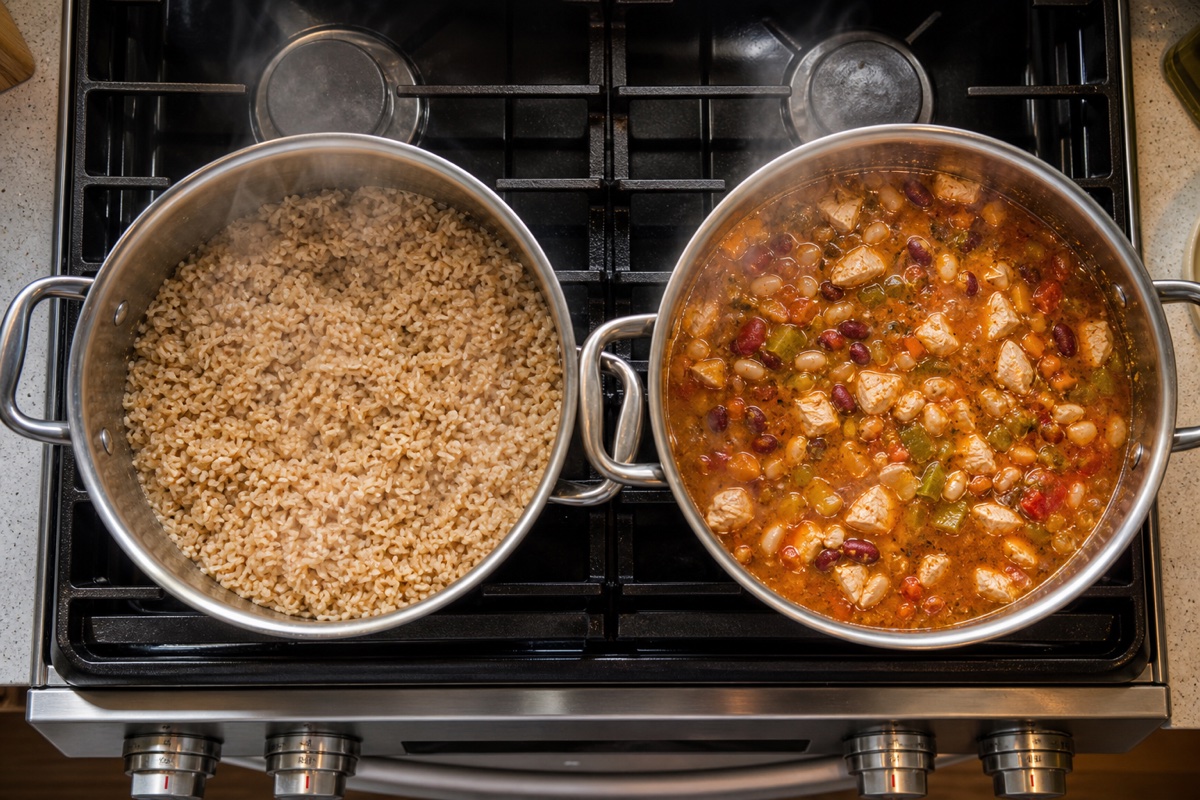
The Two-Pot Week is the simplest system on this site and the one I’d tell someone to start with if they only try one. The structure: pick two proteins, cook both in parallel on the same day, and treat both as raw material rather than a finished dinner.
Why two, not one. A single batch-cooked protein gets boring by day three — same chicken, same seasoning, same everything. Two proteins cooked in the same hour give you enough variety that Wednesday doesn’t taste like a rerun of Monday, without doubling your time in the kitchen. You’re not cooking twice as much; you’re cooking two things at once.
How the remix works. Neither protein is dressed up as a meal when it comes off the heat — no sauce, no sides plated in. That’s what happens at dinner time, fast, using whatever’s around: the roast chicken goes into a grain bowl one night and a wrap the next; the spiced mince goes over rice one night and into lettuce cups the next. The system is in the separation between “cook” and “assemble” — you do the hard part once and the easy part four times.
What it takes. About an hour on a Sunday (or whichever day is actually free — this doesn’t have to be a Sunday), two pans or trays, and a fridge with enough room for eight portions across two containers. See the Sunday Two-Protein Batch recipe for the exact version I run most weeks, and the freezer turkey chilli for a doubled-batch variant that goes straight to the freezer instead of the fridge.
Where this breaks down. If your week genuinely has zero repeat meals in it — every night is a different cuisine, a different technique — this system fights you instead of helping. It’s built for the reality that most weeks are more repetitive than we like to admit, and leans into that instead of pretending otherwise.
Recipes and guides for this system
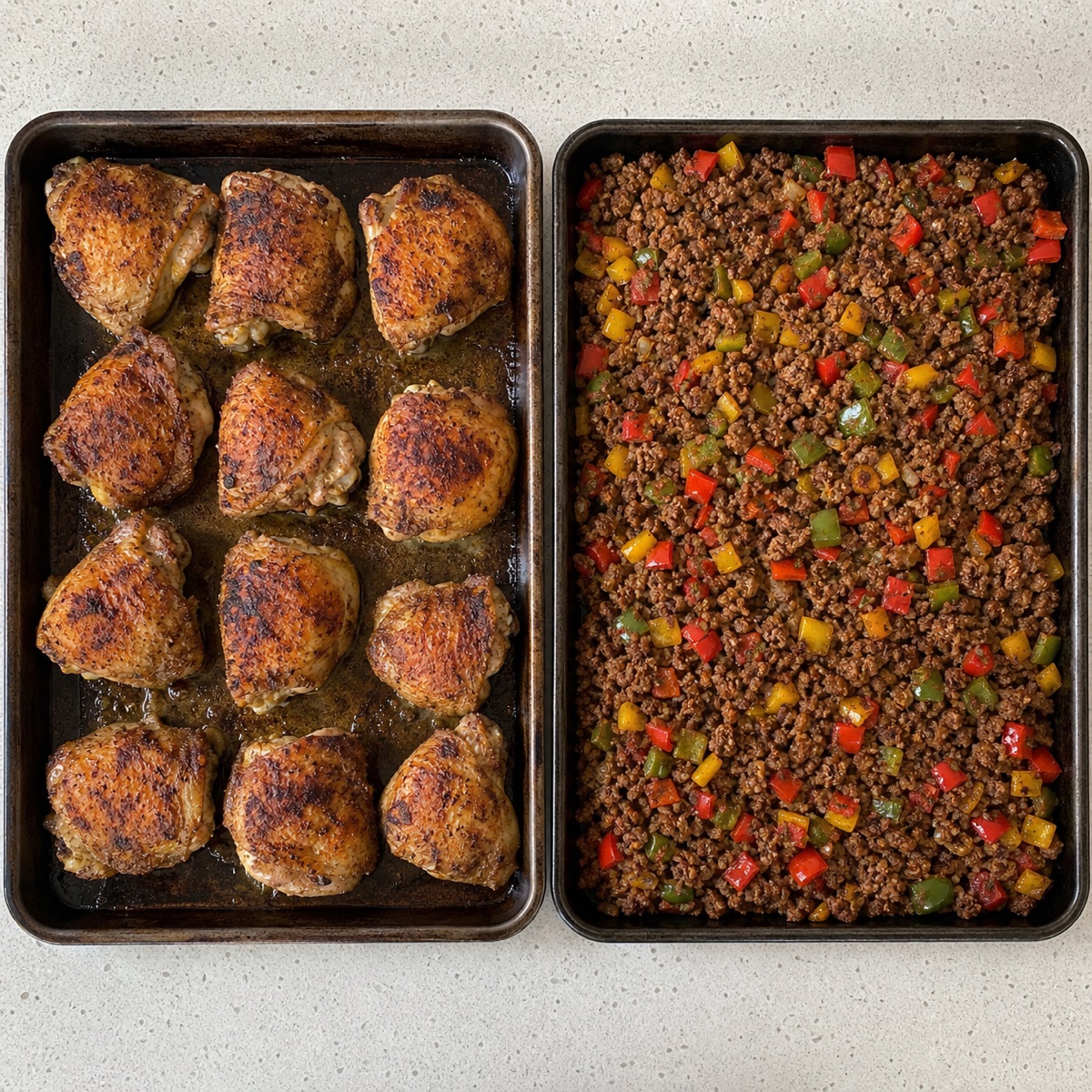
The Sunday Two-Protein Batch
Roast chicken thighs and a tray of spiced beef mince on the same Sunday afternoon — the base for four different dinners by Wednesday.
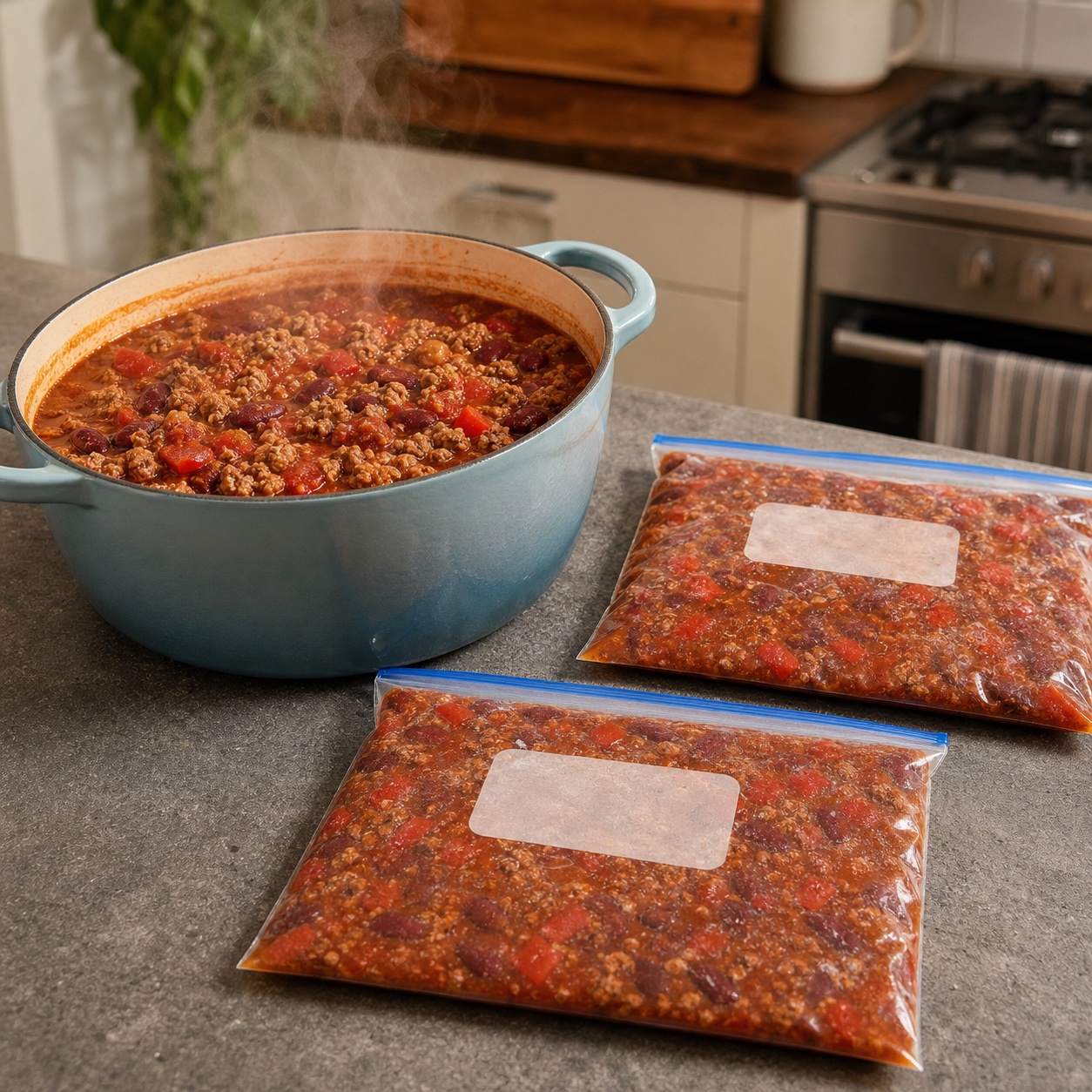
Freezer Turkey Chilli, Doubled on Purpose
A double batch of turkey chilli that freezes flat — thaws in a sink of water in twenty minutes on the nights you didn't plan ahead.
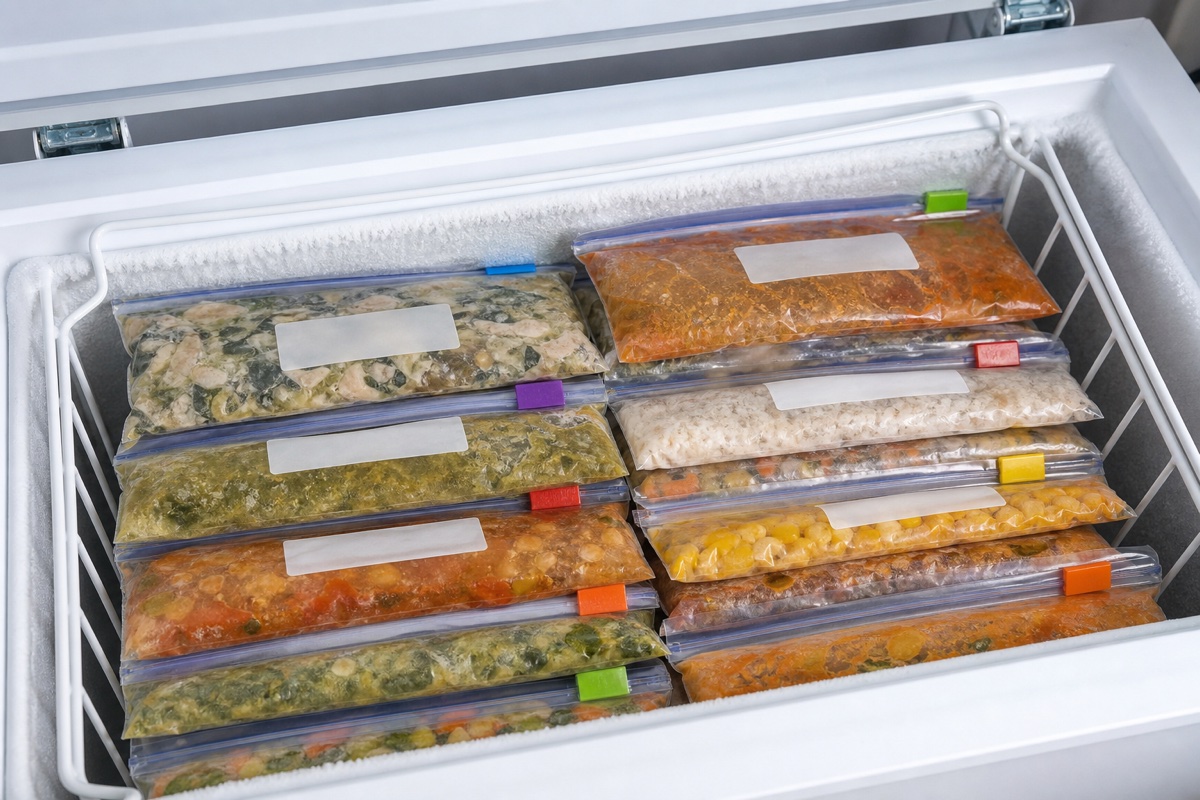
How to Build a Two-Week Freezer Buffer
A step-by-step system for building a rotating freezer buffer that survives your busiest weeks — not a stockpile you forget about.
A Meal-Systems Approach to Weeknight Dinners
Why 'what's for dinner' should be a solved problem by Sunday night, not a daily question — and how to actually build that system.