How to Build a Two-Week Freezer Buffer

Most people’s freezers are a graveyard, not a system. Something goes in during a burst of enthusiasm, gets pushed to the back by the next grocery shop, and comes out eighteen months later as a frost-covered mystery nobody wants to identify. A freezer buffer is the opposite of that: a small, deliberately rotated stock of meals that exists to actually get eaten, on a schedule you control.
What a freezer buffer actually is
Four to six single-serve portions of meals that freeze and reheat well, rotated on a first-in-first-out basis, sized to cover roughly two weeks of backup meals. It’s not a stockpile for a hypothetical emergency. It’s a working buffer against the ordinary weeks where cooking doesn’t happen: a late meeting, a sick day, a deadline that eats your evening.
The number matters. Fewer than four and you run out before the busy week ends. More than six or eight and the rotation stops being manageable. Things get buried, dates get forgotten, and you’re back to a graveyard freezer with extra steps.
What goes in, and what doesn’t
Braises, chillis, curries, soups, and batch-cooked proteins hold up well to freezing and reheating. The fat and moisture in a slow-cooked dish actually protect it against the drying effect of the freezer, and reheating brings most of the texture back.
What doesn’t work: anything cream-based splits when it thaws and reheats, turning grainy instead of smooth. Fresh, delicate additions like lettuce and herbs should never go in frozen at all; add them after reheating instead. Rice and pasta both freeze fine but go slightly softer on reheat, so undercook them a little before freezing if a meal includes either.
The portioning rule that makes or breaks this
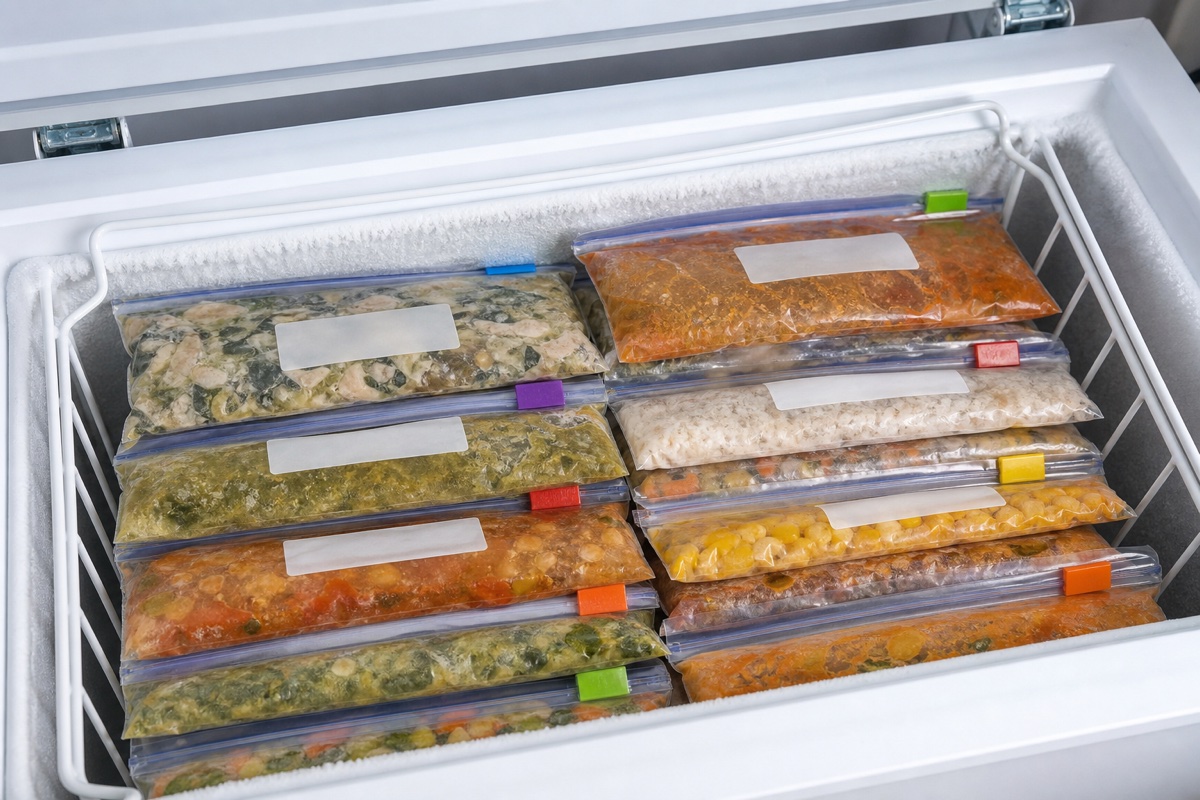
Freeze flat, in single-serve bags, not one large tub. This is the single highest-leverage decision in the whole system. A flat bag thaws in a sink of cold water in fifteen to twenty minutes because the surface area is high relative to the thickness. A solid frozen block in a tub takes an hour or more in a microwave, and it usually cooks unevenly: hot at the edges, still frozen in the middle, by the time it’s “done.”
Lay bags flat on a tray until solid, then stack them on their sides like files. This also solves the actual space problem most people blame on their freezer being too small — a stack of flat bags takes a fraction of the room a stack of round tubs does.
Labelling: the part everyone skips and shouldn’t
Write the contents and the date, every time, on the bag itself — not a scrap of paper that falls off in the freezer. “Chilli” tells you nothing useful three months from now. “Turkey chilli, 15 Dec” tells you exactly how old it is and whether it’s still worth eating, which is the entire point of running a first-in-first-out rotation instead of a random grab.
How to refill it without a dedicated cooking session
The buffer should never require its own separate cooking day. Whenever you’re already making a batch recipe — see the Sunday Two-Protein Batch or the freezer turkey chilli — double it, eat half fresh across the next few days, and freeze the rest in portioned bags. The buffer refills itself as a side effect of normal cooking rather than as extra work layered on top of it.
When the system actually gets used
The test of a freezer buffer isn’t whether it’s full — it’s whether it gets emptied and refilled on a rolling basis. If you’re pulling from it two or three times a fortnight and topping it back up whenever you batch-cook anyway, it’s working. If it’s been full and untouched for two months, the rotation has stalled and it’s back to being a graveyard with better labels. Check it the same way you’d check a pantry: briefly, on shopping day, so it stays part of the system instead of becoming background noise in the freezer door.
Frequently asked questions
How long can I actually keep frozen meals before quality drops?
Three months is a reasonable ceiling for most cooked meals in a home freezer — beyond that, texture starts to suffer even though the food is still safe. Label with the date so 'still fine' doesn't become a guess.
Do I need a chest freezer for this to work?
No. A standard freezer drawer holds a two-week buffer of 4–6 single-serve meals without trouble — this system is about rotation discipline, not extra appliance space.
Related guides and recipes
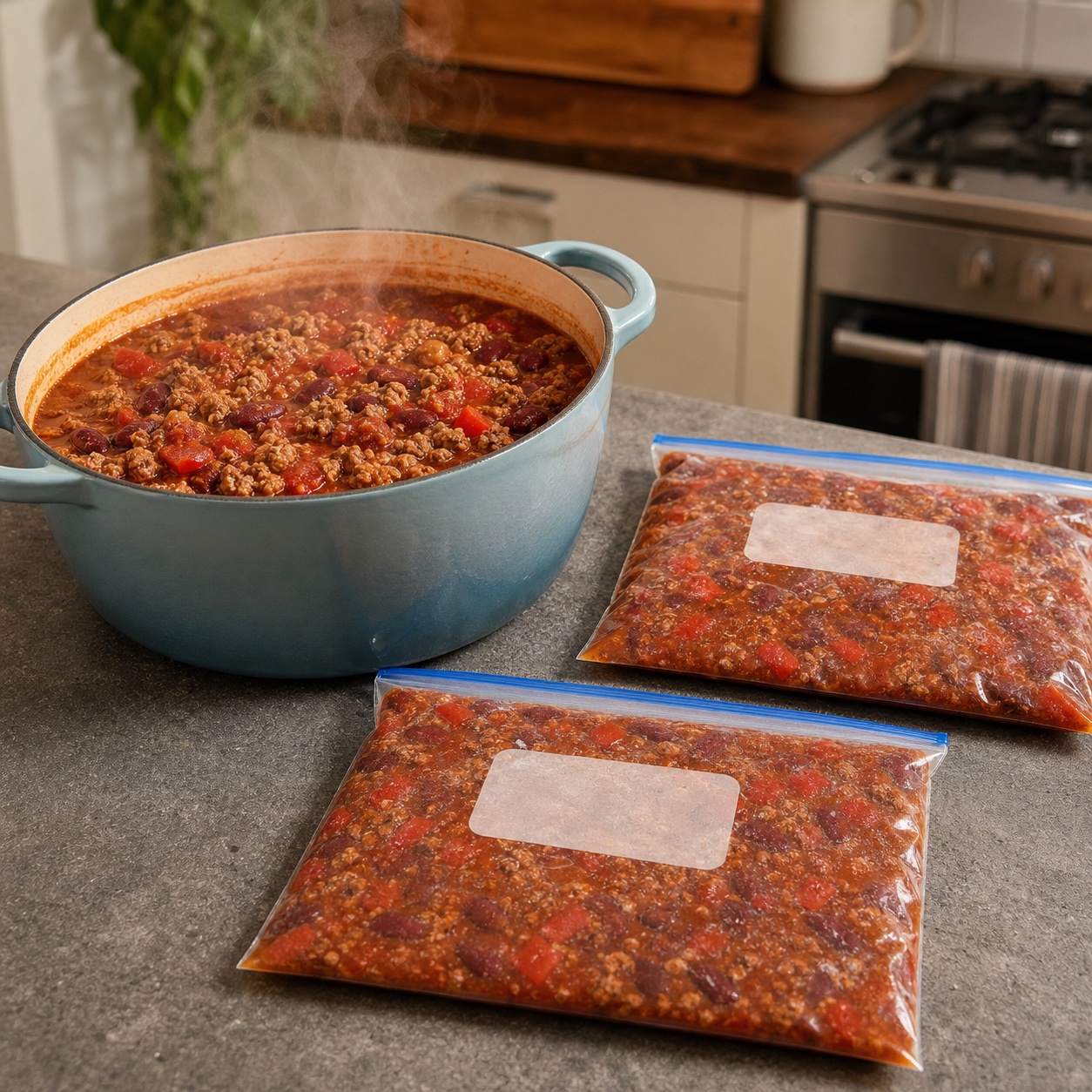
Freezer Turkey Chilli, Doubled on Purpose
A double batch of turkey chilli that freezes flat — thaws in a sink of water in twenty minutes on the nights you didn't plan ahead.
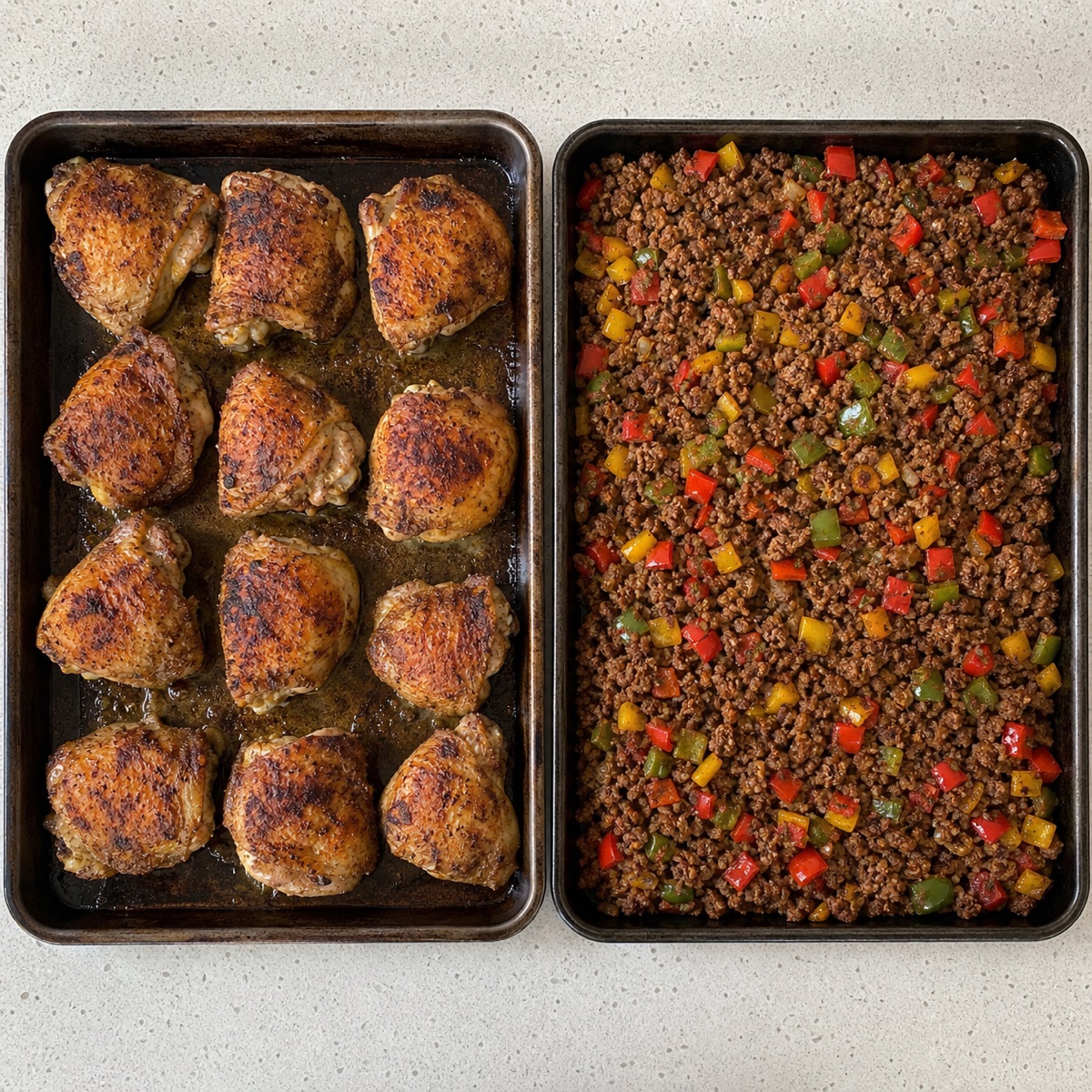
The Sunday Two-Protein Batch
Roast chicken thighs and a tray of spiced beef mince on the same Sunday afternoon — the base for four different dinners by Wednesday.
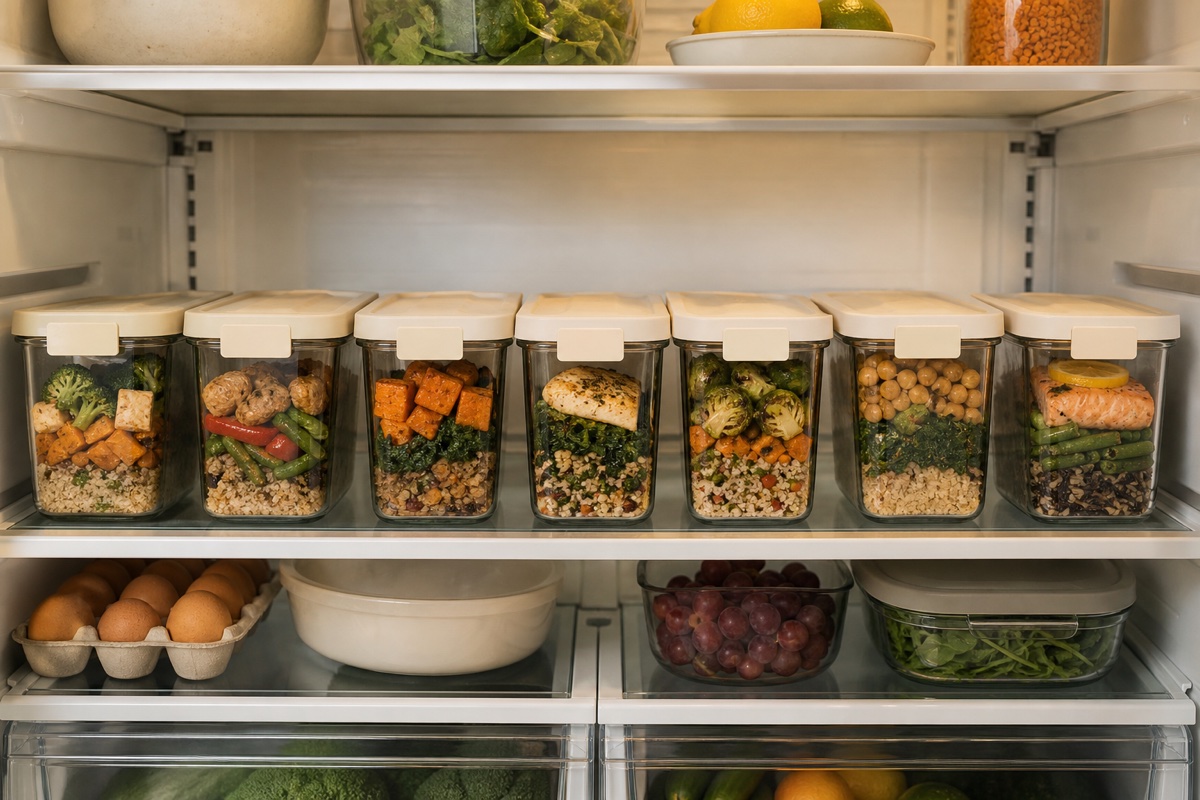
A Meal-Systems Approach to Weeknight Dinners
Why 'what's for dinner' should be a solved problem by Sunday night, not a daily question — and how to actually build that system.