The Freezer Buffer
A standing rotation of frozen backups for the weeks you genuinely can't cook — built to actually get used, not forgotten in the back of the freezer.
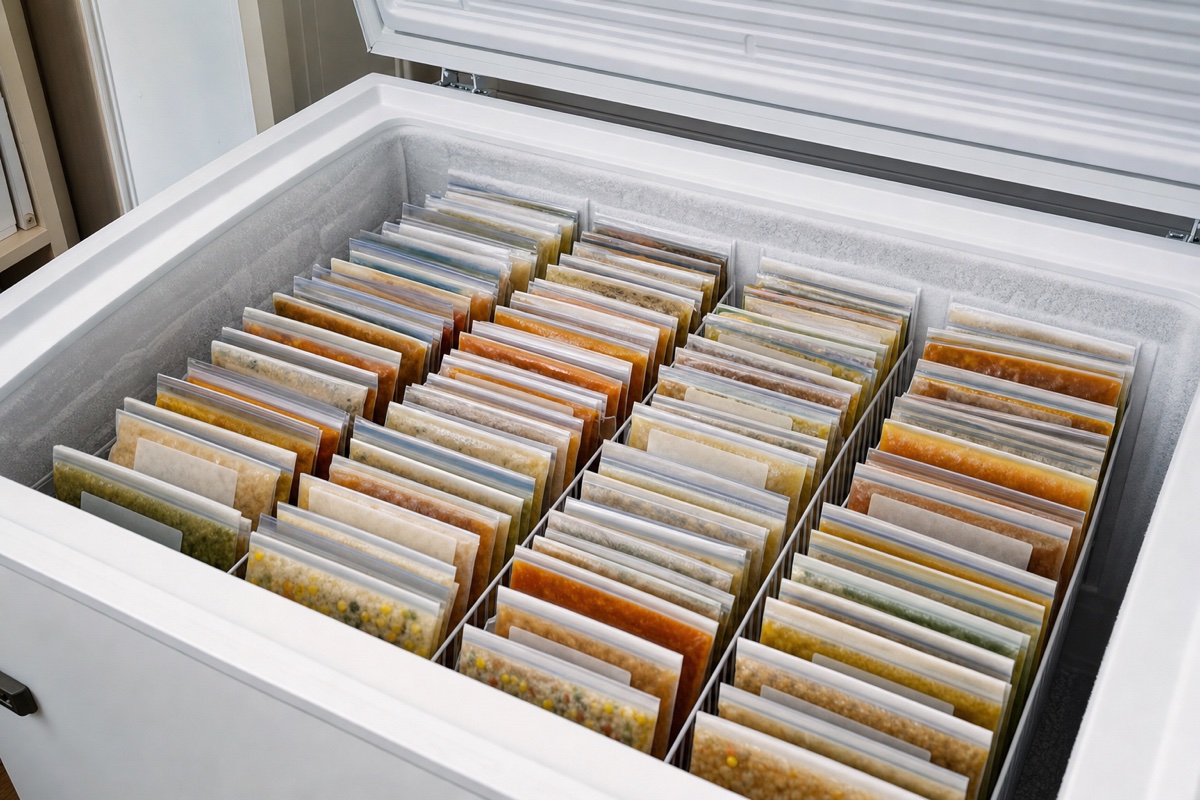
Most freezer stockpiles fail the same way: things go in, nothing comes back out, and eighteen months later you’re throwing out a frozen-solid mystery container that’s not worth identifying. The Freezer Buffer is a smaller, more deliberate version — a standing rotation of 4 to 6 single-serve meals that exists specifically to get eaten, not admired.
The rule that makes it work: first in, first out. Every new batch goes in the front, and you eat from the back. Label everything with the date it was cooked, not just the name — “chilli” tells you nothing three months from now, “chilli, 12 Dec” tells you whether it’s still worth eating.
What goes in. Meals that freeze and reheat well without turning to mush: chillis, curries, soups, braises, and batch-cooked proteins like the ones in the Two-Pot Week. What doesn’t: anything cream-based (it splits on reheating), anything with fresh lettuce or delicate herbs built in (add those fresh after thawing instead).
Portioning matters more than the recipe. Freeze in flat, labelled, single-serve bags — not one large tub. A flat bag thaws in twenty minutes in a sink of water; a solid block takes an hour in the microwave and usually cooks unevenly by the time the middle’s hot. See the freezer turkey chilli recipe for a worked example of a doubled batch built specifically for this.
How often to refill it. Whenever you’re already cooking a batch recipe, double it and freeze the extra rather than treating freezer-stocking as its own separate task. The buffer refills itself as a side effect of normal cooking, which is the entire point — it shouldn’t cost you a dedicated session.
Recipes and guides for this system
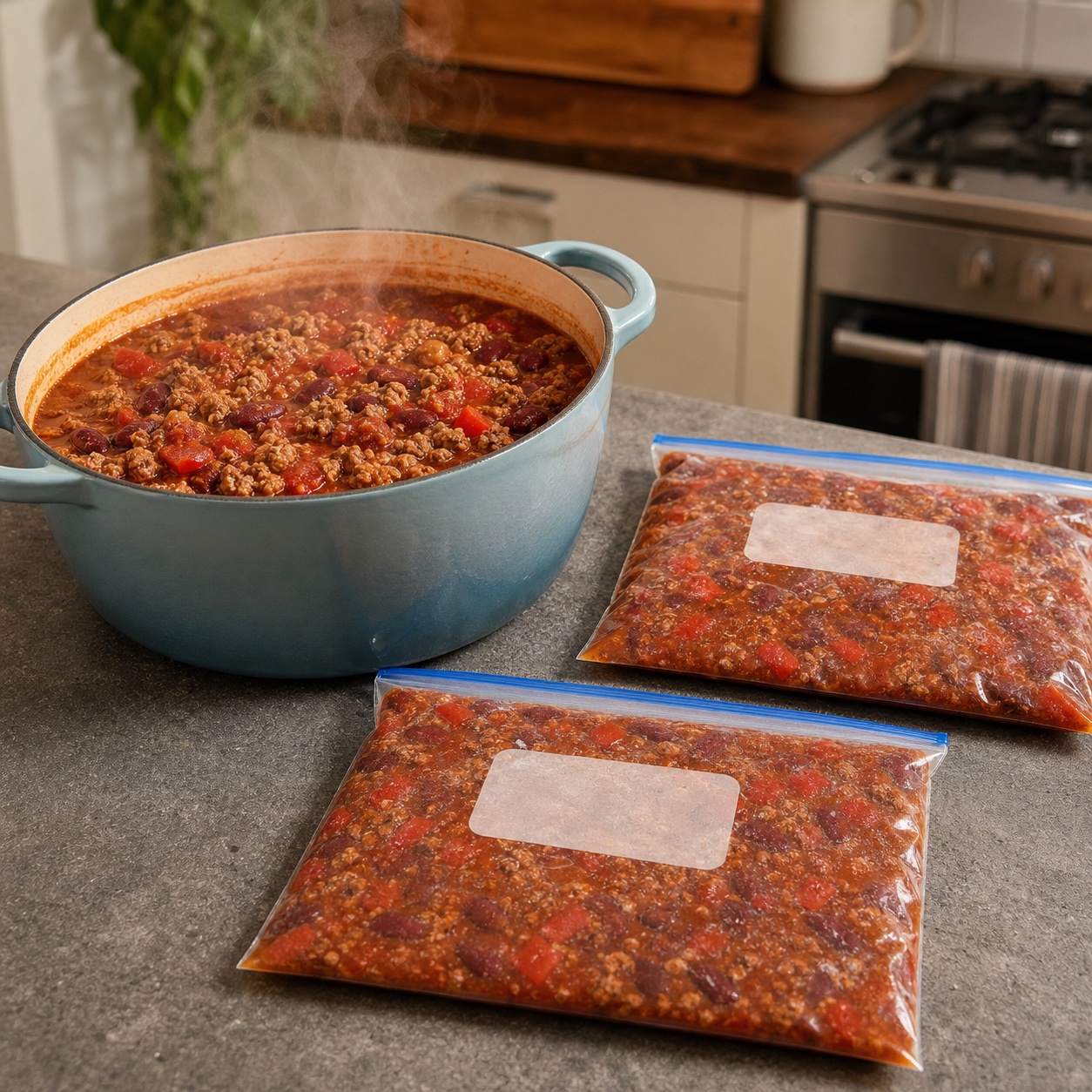
Freezer Turkey Chilli, Doubled on Purpose
A double batch of turkey chilli that freezes flat — thaws in a sink of water in twenty minutes on the nights you didn't plan ahead.
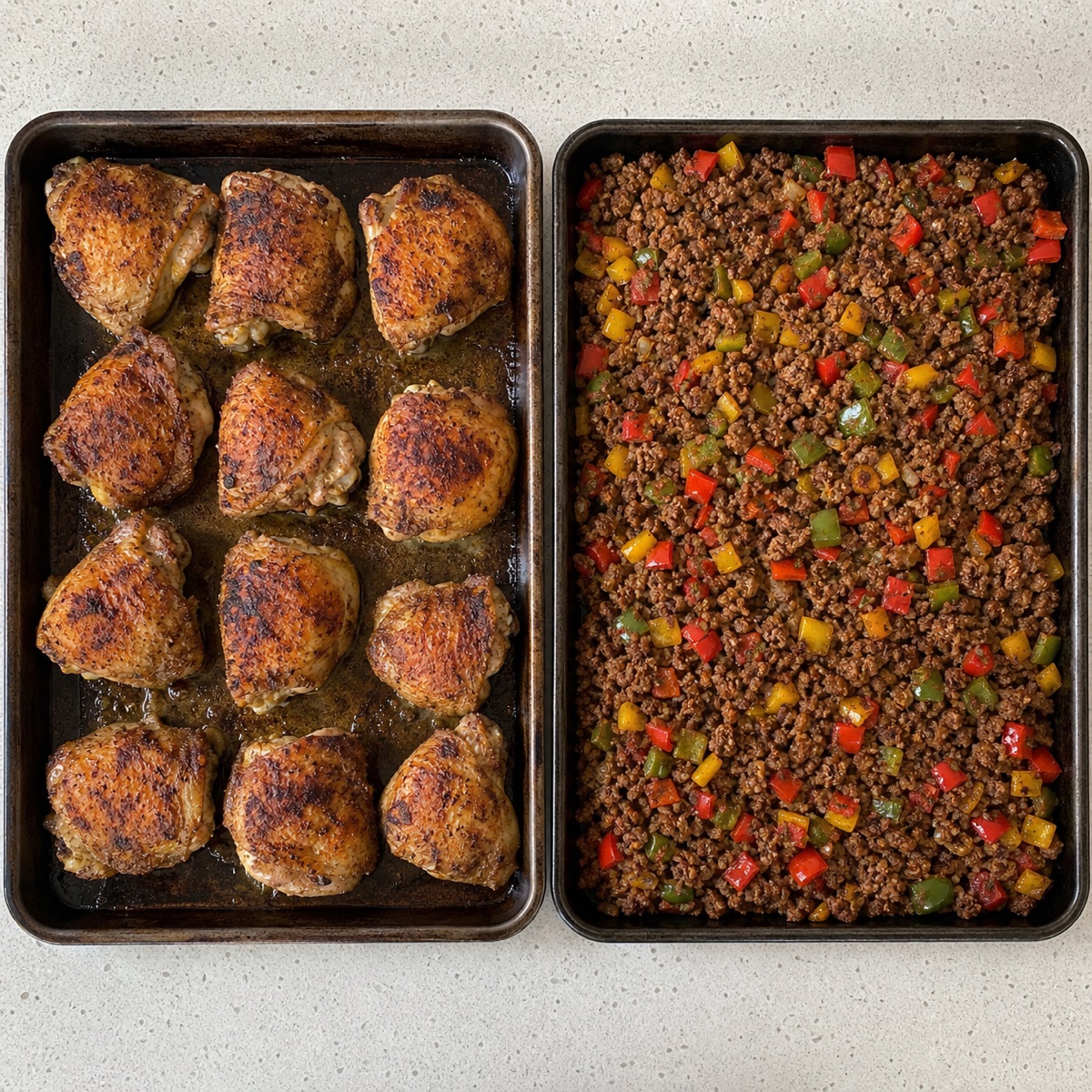
The Sunday Two-Protein Batch
Roast chicken thighs and a tray of spiced beef mince on the same Sunday afternoon — the base for four different dinners by Wednesday.
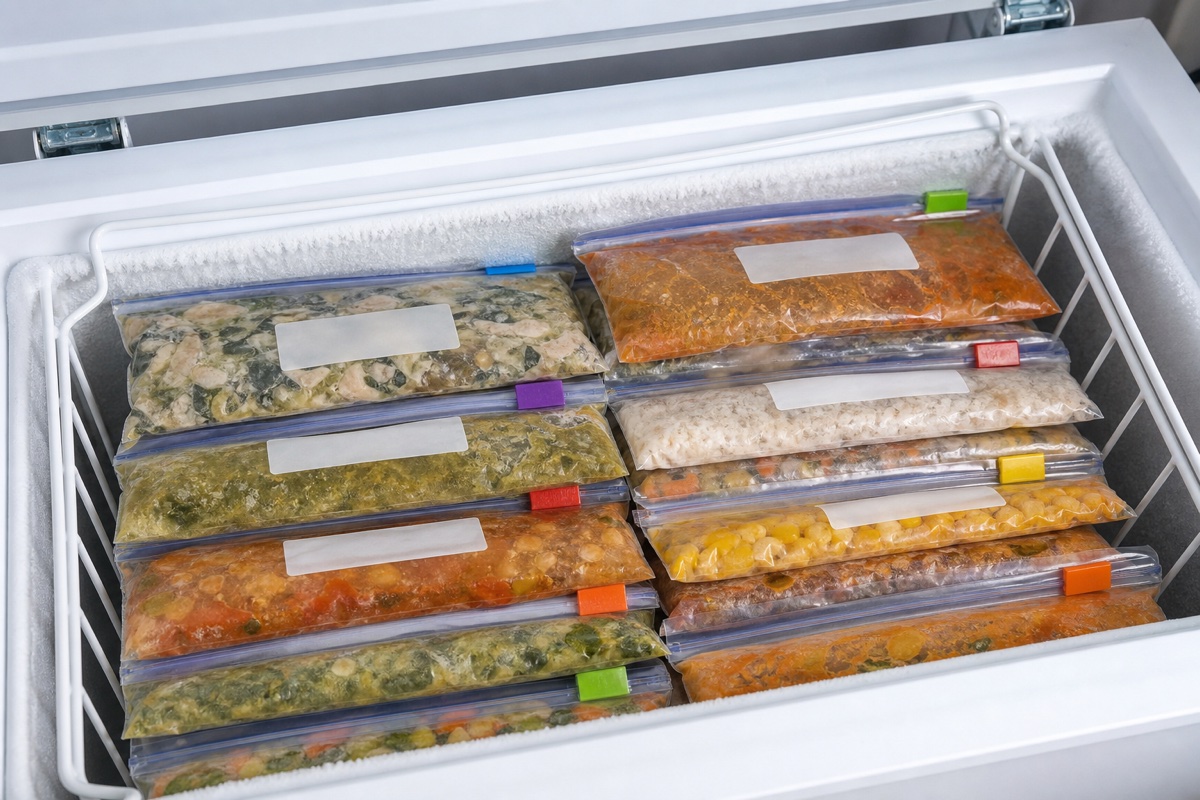
How to Build a Two-Week Freezer Buffer
A step-by-step system for building a rotating freezer buffer that survives your busiest weeks — not a stockpile you forget about.