How to Eat Well During a Deadline Week

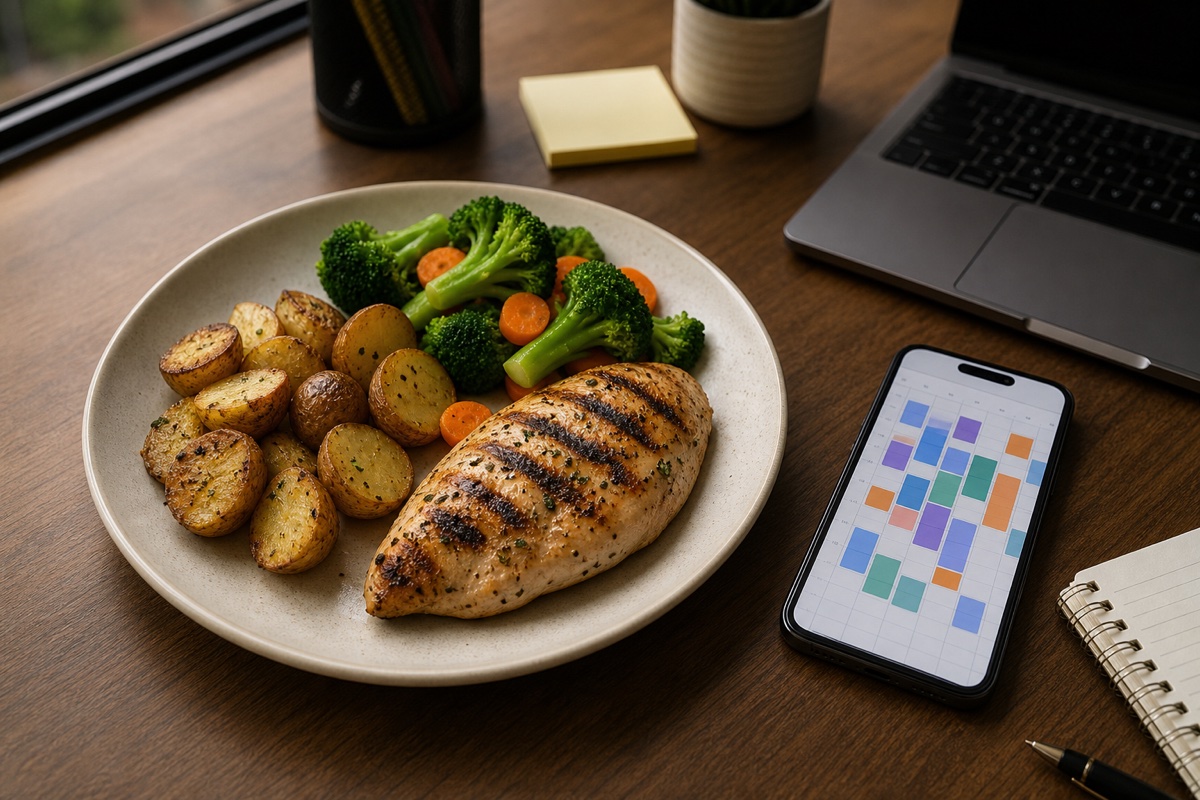
The advice most nutrition content gives for a genuinely bad week — meal prep on Sunday, plan every meal in advance, batch-cook proteins — assumes you have time and energy that a deadline week specifically removes. This is the version for when that assumption doesn’t hold.
Lower the bar on purpose
A deadline week isn’t the week to attempt your most ambitious cooking. The goal shifts from “eat well” in the usual sense to “don’t let this week actively work against you” — a lower, more achievable bar that’s still worth hitting. Trying to run your full system during the exact week you have least capacity for it is how good systems get abandoned entirely instead of just paused.
The fifteen-minute floor
Keep two or three genuinely fast meals in reasonable rotation for exactly this scenario — sheet-pan salmon or garlic butter prawns both land under twenty minutes with one pan and minimal decision-making. The point isn’t that these are the most exciting recipes on the site; it’s that they’re achievable on a night when “achievable” is the only requirement that matters.
Takeaway isn’t the enemy here
Ordering in during a deadline week isn’t a failure of the system — it’s a reasonable trade against your actual constraints that week. The useful skill is choosing better among takeaway options rather than avoiding takeaway altogether: something protein-forward with vegetables holds up better than something built entirely around fried carbohydrate, and it’s usually not a harder order to place.
Protect two things, let the rest slide
Hydration and protein are the two levers worth protecting even in a genuinely chaotic week — both are cheap to maintain (a bottle of water at your desk, a tin of tuna or a protein shake) and both do a disproportionate amount of work for how you feel by Thursday. Everything else — variety, cooking from scratch, hitting a specific vegetable count — can slide for a week without much real cost.
Travelling during a deadline is its own version of this
The same logic applies when the deadline week involves travel: lower the bar to “protein at most meals, water instead of relying on coffee for hydration, and don’t skip meals entirely because the schedule’s chaotic,” rather than trying to replicate your full at-home system in an airport or hotel room. A protein bar and a piece of fruit from a servo beats nothing, even if it’s not what you’d choose on a normal week.
What to actually plan for, if you plan at all
If you know a deadline week is coming, the highest-leverage thing to do beforehand is stock two or three fifteen-minute meals and make sure the freezer buffer has something in it — not to plan every meal of the week in detail, which rarely survives contact with how chaotic the week actually turns out to be. A little preparation for the low-effort version of the system beats a detailed plan for the full version that won’t get followed anyway.
The week after matters more than the week itself
One rough week of lowered standards doesn’t undo months of a reasonable baseline — the mistake is treating a deadline week as a reason to abandon the system afterward too, out of some sense that the week’s already a write-off. It isn’t. Go back to the normal rotation the day the deadline passes, and the week itself barely registers in the bigger picture.
Frequently asked questions
Is it okay to order in every night during a bad week?
Yes, occasionally, without it being a failure. The goal during a deadline week is a reasonable floor, not a perfect diet — a few nights of takeaway bookended by better choices is a normal week, not a collapse.
Related guides and recipes
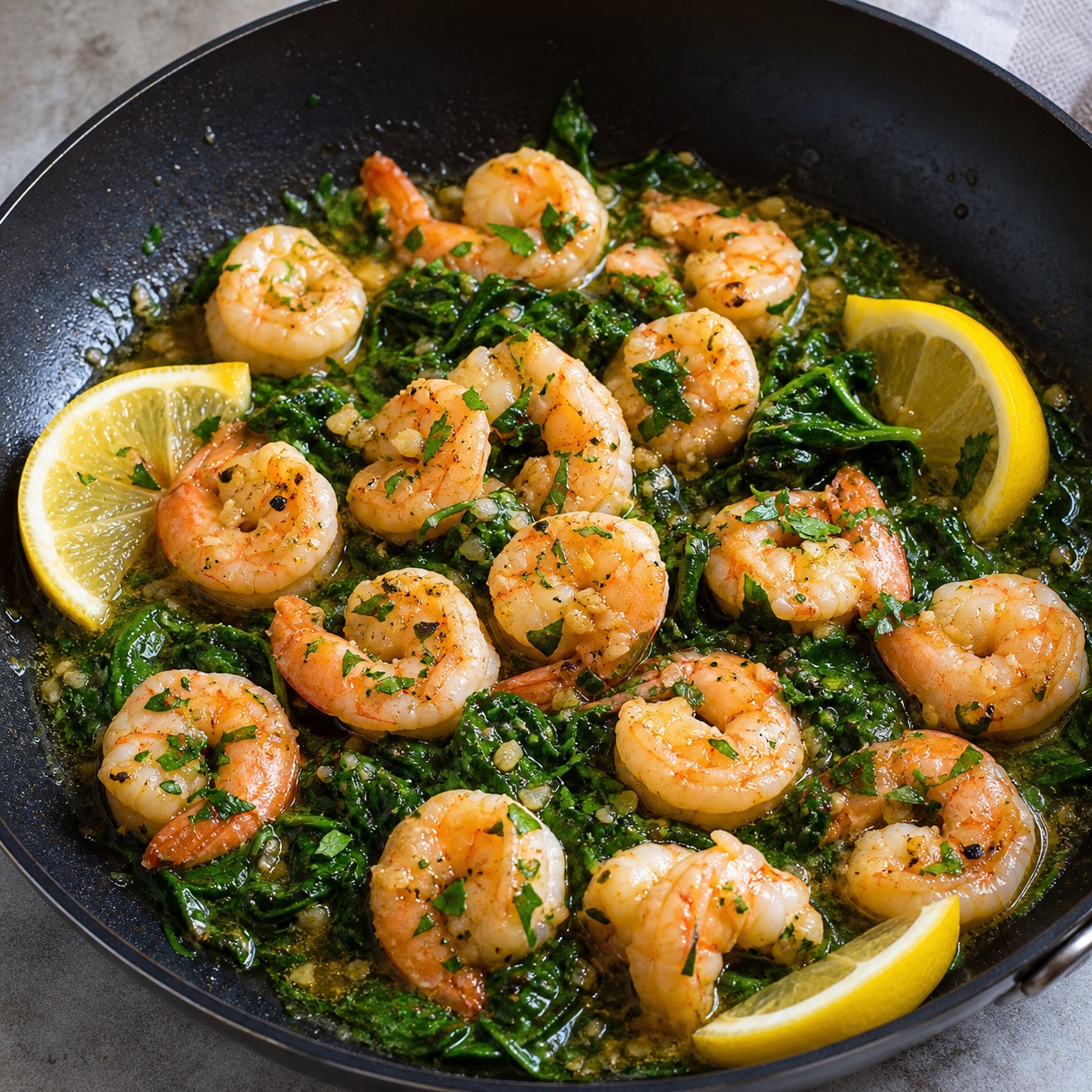
Garlic Butter Prawns and Greens
Prawns cooked hard and fast in garlic butter over greens — the fifteen-minute dinner for the nights you left a meeting at 6:45.
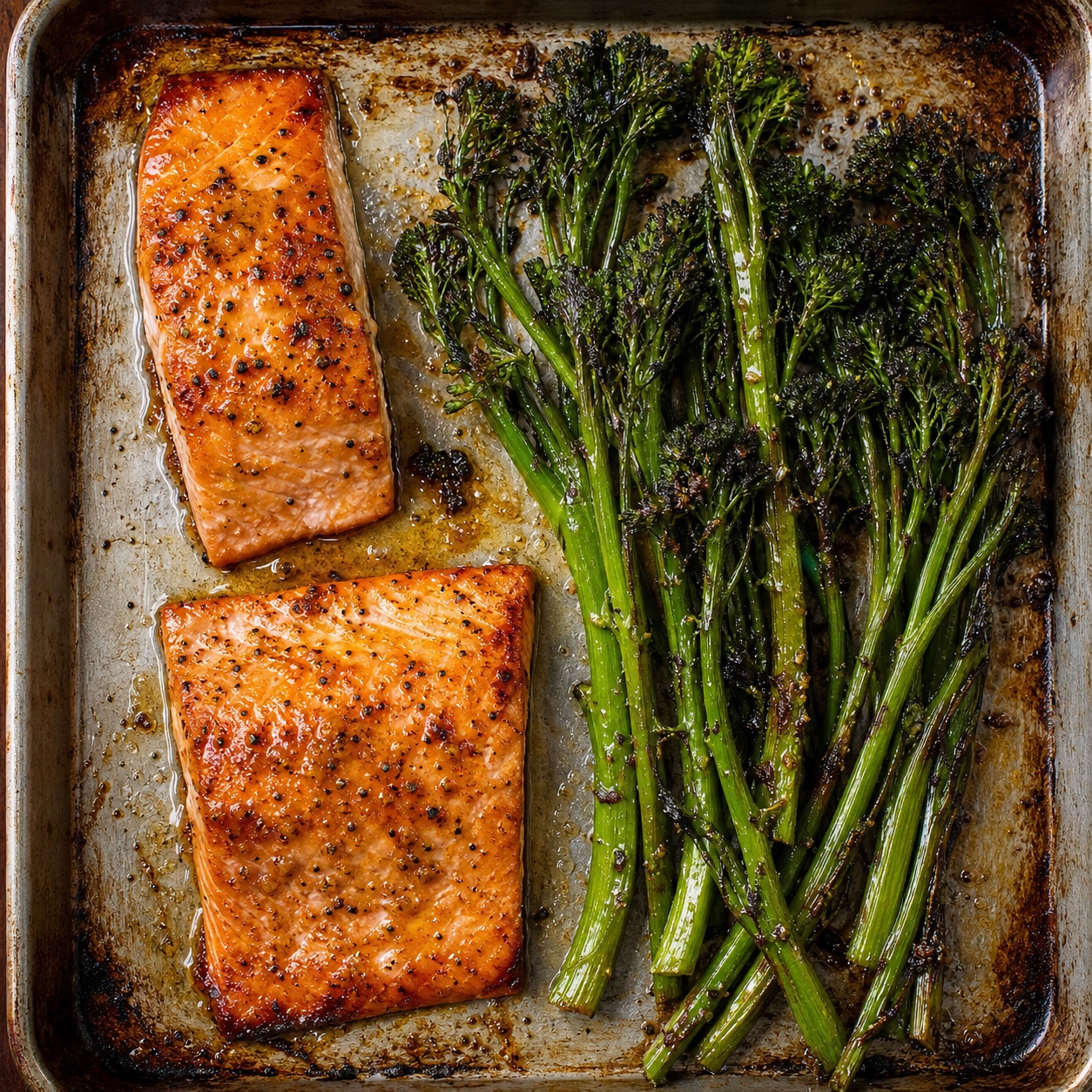
Sheet-Pan Salmon and Broccolini
One tray, twenty minutes, minimal washing-up — salmon and broccolini with a miso-butter glaze.

Fuel for Sprints: Eating Around a Deadline Week
The specific eating pattern that holds up during a development sprint or any other stretch of consecutive long, high-focus days.